Trending: Deepfakes

Deepfakes are videos that use AI technology and data (the more data the better) to manipulate images. This can be done with images or audio, but what makes a deepfake is the element of AI and data combined to drastically alter an image. The AI used to create deepfakes is meant to mimic the human brain using an algorithm based on “deep learning” neural networks. At it’s inception, only people with access to an expansive bandwidth of computing power were able to create deepfakes, but in the course of a year, deepfakes have become so realistic and easy to make, it’s become difficult to distinguish what’s real and what’s fake and pretty much anyone with a computer can create one now. This has lead to some beneficial uses as well as some potentially harmful content being created.

One example of a positive use of deepfakes is recreating a deceased loved ones image or voice likeness using a large database of previously recorded video/audio content to allow one’s descendants to watch or listen to in the future and show them what their relatives were like during their lifetime. One way it can be harmful is when someones face or voice is used to create revenge porn in order to defame a person, or if the president’s face and voice are used to put out a fake news video, maybe declaring that the U.S. has been attacked when it actually hasn’t, or by spreading false political statements. This, of course, can pose a threat to national security. Deepfakes may also be created for a multitude of other good and bad purposes such as extortion, fabricated crimes, entertainment, and parody.

One of the top examples of a deepfake I have found from multiple sources online was a video, seemingly of former president Barack Obama, but was actually of Jordan Peele. The image was Barack Obama’s face that was edited in production to follow the movement of Jordan Peele’s mouth to make it look like it was really Obama speaking, while Peele’s voice was altered to sound exactly like Obama’s. This was shocking to watch because if I hadn’t known ahead of time that this was a deepfake, I think I may have thought that video was actually of Barack Obama at first. This was Jordan Peele’s goal: warning people about the dangers of deepfakes. For this video, other deepfake video examples, and additional political concerns regarding deepfakes click here to watch.
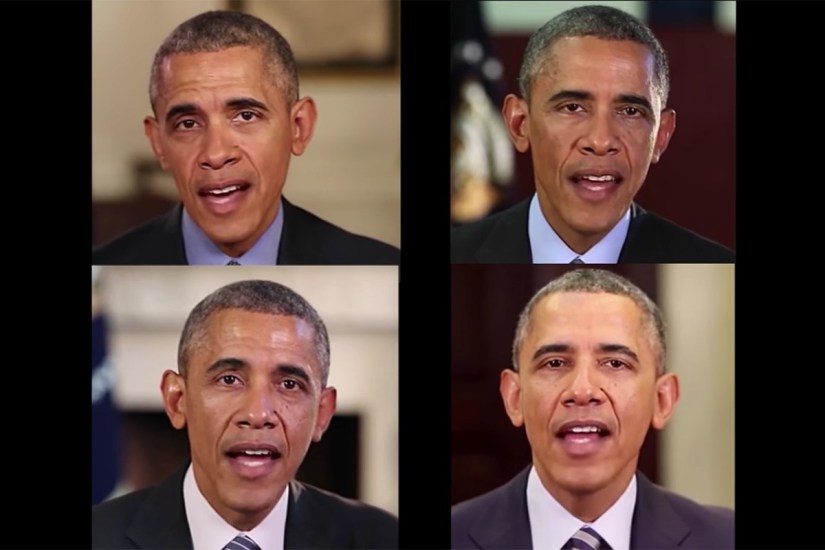
deepfake

I did a little research to look up other examples of audio deepfakes and found a really good satirical YouTube account that creates short audio clips imitating Donald Trump’s voice. You can watch one here.

Two of the main dangers of deepfakes include the ability to instantly share them on social media and low media literacy. These two things go hand in hand. Both adults and digital experts alike can experience difficulty when it comes to discerning what’s real and what’s not trustworthy. We are all guilty of sharing “fake news,” stories and sources occasionally! When it comes to addressing the issue of spotting deepfakes or doing something about it, things get a bit tricky. The first solution is creating new AI’s/algorithms to detect deepfakes, but there are a couple of challenges. As a first point, deepfakes are rapidly evolving and becoming more realistic, so it would be tough to create an algorithm to keep up with this steady growth and level of skill. Secondly, this technology would have to be implemented at the very top of the distribution channel – either when these deepfakes are created somehow, or right when they are posted online and finding out who anonymous deepfake creators are. Otherwise they can spread like wildfire over the internet. Another way deepfakes will most likely become regulated is through Congress, although there will probably be some constitutional implications, such as freedom of speech. Lastly, social media sites are making strides in handling harmful content posted on their platforms. I can definitely see these sites implementing their own algorithms and rules to control deepfakes and their publishers in the future.

As I was thinking of ways in which deepfakes could apply to marketing, PR, journalism and advertising, I immediately thought of using a celebrity or influencers likeness to create promotional content without actually having to pay these people to physically come in to record or film content for a company. This could be more cost efficient than flying a celebrity or influencer to your HQ, paying for their hotel, food, and other transportation costs in addition to compensating them for their work. Instead, using deepfakes can maybe allow companies and public figures to come to an agreement about one time payment options to use their likeness or negotiate some other compensation contract similar to this (i.e., royalties). This is important because it could make promoting a business more easily attainable and successful for low-budget companies such as start-ups trying to make their product or service known to target markets.

One issue I could see rising from the use of deepfakes in marketing would be deception, particularly in advertising. Using someone’s likeness in a deceptive ad would not bode well for the company or the person whose image is being used. To prevent this from happening, I think deepfakes will require disclosure to audiences, detailed contracts,  extreme attention to the law, and even more attention to each step of the production process.

What are your thoughts on deepfakes?

Working With WordPress

Using platforms such as WordPress has become such a crucial part of working in marketing. WordPress has grown from being a blogging site to becoming an easy to use platform enterprises can use to jump start their online presence without the need to hire a web designer.

Based on my brief experience using WordPress (about 1.5 years), I’ve realized that WordPress is pretty straightforward. The simple layout makes it easy to find all of the settings, add-ons, or actions you want to make to your website. There are so many template options available for any kind of website you want to build. Options range from strictly blogging templates, to forums, to e-commerce sites, to news forums, etc., so the possibilities are basically endless. WordPress templates and accounts also come at different price ranges. There are different subscription prices you can pay based on how much you want to use WordPress and what features you want on your site and templates range from being free to being sold in the hundred+ dollar range from what I am aware of. Therefore, I think WordPress can be used by anyone with any level of website skill/knowledge and for any reason.

One blog I always go back to is Gal Meets Glam because I love how dynamic it is, but clean and simple at the same time. The brands theme is strong across every tab of the website and it’s easy to navigate. I like how Julia incorporates her own clothing line into almost every blog post in an effortless way. There’s definitely a lot of native advertising going on here, but at first glance, you would never be able to tell that this website is promoting her own clothing line. I love looking at this site for outfit inspiration or just browsing the clothing collection.

gmg

The Future of Communications

My prediction for the future of communications lies in the future of technology itself. We can never have enough gadgets and gizmos for our own modern convenience, right?

It is no secret that AI is quickly taking over the world. I think that in the future, everyone in communications and similar fields will know how to program or use AI’s to some extent. Just like we learn English, math, and science as core classes from a young age all the way through college, I believe that AI will also become a core class taught from a young age and become a requirement for all students to take for a certain number of years as well. MIT is already taking step sin this direction by building an AI school and developing AI degree programs, which will be the first of its kind in the U.S.

Communications based job positions already require candidates to be a jack of all trades and know a little bit about everything related to the business they are working for, so I can see AI quickly becoming another requirement for digital communicators of the future to know well. I think that it will still be quite a few years before this future becomes a reality, but the importance of AI is obvious when it comes to optimizing time, data, performance, and results for companies of all kinds.

samuel-zeller-158996-unsplash


The Future of Public Relations

As this semester comes to a close, I can’t help but reflect on how much I’ve already learned about journalism, advertising, public relations, and marketing, and I’m extremely eager to dive in even deeper into my concentration of public relations. There are so many new and emerging trends in public relations that I thought I would share a couple of my findings.

Although PR is a field that relies heavily on human connections, there is going to be a huge shift towards digital based practices. AI will become more mainstream and will be used to collect and interpret data, allowing PR professionals to focus more of their time and attention to personal tasks. Media fragmentation will continue to grow as new social media outlets will emerge, allowing users to access information from a number of sources. This will have an affect on ways in which PR professionals communicate with the masses. Communication will become more innovative, allowing PR professionals to communicate with a brand’s target audience like never before, and put together more futuristic-looking press releases. Gone will be the days of the simple information read on paper press releases as the field steps in the direction of producing press releases with visuals, video content, music, graphics, and even animation. Press releases won’t be the only things becoming more innovative. Campaigns, events, invitations, media kits, websites, meetings and so much more will rely heavily on these creative fields too, and clients/consumers will probably also see a huge shift towards PR firms using things like virtual reality specifically to plan and execute projects.

rawpixel-626044-unsplash

The daily tasks of PR professionals is always shifting to keep up with demands. PR professionals now have to be somewhat of a “jack of all trades” and know a bit about everything related to advertising, crisis management, campaigning, corporate communication, politics/law, event planning, business development, marketing, thought leadership and content creation among so many other things. Some of these qualities such as thought leadership, was once thought to be a skill only C-level officials had to have, but PR is becoming more and more of another specialized leadership position in itself. These positions are becoming harder to get and just like almost all other career paths out there, learning and improving at your skills never stops in this field, and I think the more that you can do, the better you will function and contribute in a PR job.

The Future of Journalism

From waiting for the newspaper to arrive at your doorstep to seeing events as they are occurring from a device that fits in the palm of your hand, the journalism industry has come a long way for the sake of our consumption and convenience. Here are a few of my predictions of what’s still to come for the future of journalism:

1.) I think video journalism will take the front seat when it comes to how we get information across. The value of capturing videos of serious events and photo journalism will become extremely important when it comes to setting real events apart from fake news or made up stories. Another reason videos will become increasingly popular is because I think people are becoming less and less inclined to read full news articles. I think readers these days want to know a full story in well under 300 words, but it’s even more convenient if they can watch a quick clip on a specific story.

2.) Transparency will become increasingly important for news outlets. Instead of being transparent about the company as a whole, I think these outlets and individual reporters will have to be transparent about their personal goals and values as well as why their job matters to the rest of us.

g-crescoli-365898-unsplash

3.) In order to be more successful, I think these companies will have to start investing in their digital presence. These outlets will have to consider podcasts, more video content, games, graphics, etc., to successfully market themselves to audiences who want to see a variety of content.

4.) Journalism and media in general is a field that I think will become female-dominated. I think we will see a shift towards more women in leadership positions in this field and a more feminine tone of voice in stories that are published, similar to what the field of public relations has seen in recent years.

5.) These media outlets will start selling (if they haven’t already started selling) their own merchandise from pageviews to shirts, stationary, etc. to increase brand awareness and have another source of income.